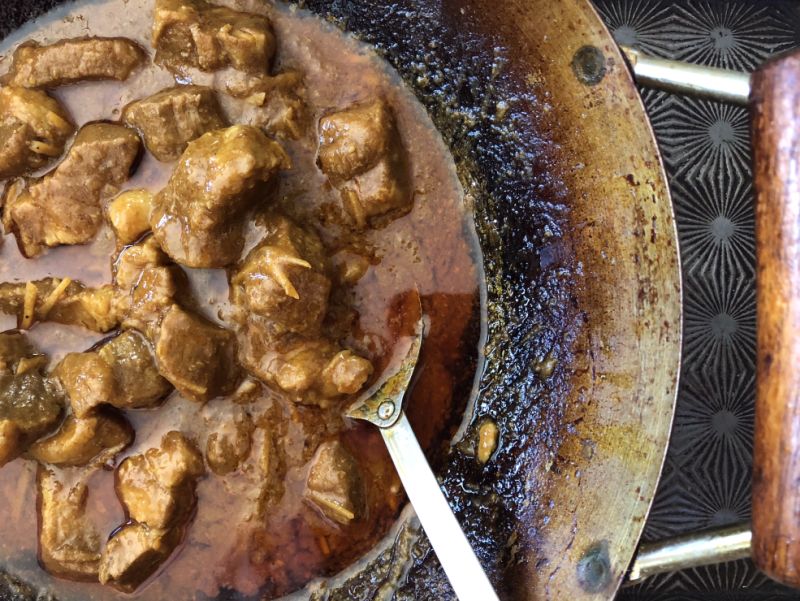
Adapted from "The Food of Northern Thailand" by Austin Bush.
Recipe by Andrea Nguyen on November 2, 2018
Ingredients
3 1/2 ounces | 105g tamarind pulp, broken into 3 or 4 chunks (if using fresh tamarind pods, shell about 8 ounces of sour pods to obtain the amount needed; see Notes to use premade Tamarind Liquid
1 3/4 pounds | 800g pork belly (including fat and skin) or fatty pork shoulder, cut in sections approximately 1 inch wide and 2 inches (5cm) long
1 teaspoon Maggi Seasoning liquid or Bragg Liquid Aminos
1 tablespoon oyster sauce
1/2 teaspoon chicken bouillon powder or base (such as Knorr or Better Than Bouillon brand)
1 teaspoon sugar
1 tablespoon hang lay powder, (or 1 1/2 teaspoons garam masala plus 1 1/2 teaspoon ground coriander)
1 tablespoon ketchup
1 tablespoon Thai-style sriracha, (such as Shark or Sriraja Panich brand, or 2 teaspoons Huy Fong Sriracha)
Steps
Bring 1/2 cup (120ml) of water to a boil in a small saucepan over medium heat. Add the tamarind pulp and mash with a spoon to combine. Set aside for at least 15 minutes.
Place the pork belly, turmeric powder, ‘black’ soy sauce, and shrimp paste in a medium 12-inch-wide (30.5cm) wok (or use 3 or 4-quart, .75-1L pot). Add enough water to nearly cover the pork. Cover with a lid and bring to a simmer. Reduce the heat to low and simmer, covered, for 10 minutes, stirring occasionally. Stir the shallots, garlic, and ginger into the wok. Simmer, uncovered, another 20 minutes, to reduce the liquid slightly. Stir in the ‘white’ soy sauce, Maggi, oyster sauce, stock powder, sugar, hang lay powder, ketchup, and chili sauce. Simmer, uncovered, another 20 minutes, at which point the liquid should have reduced by a quarter or a third of its original volume, the pork should be starting to become tender, and a thin layer of oil should begin to appear.
Using a spoon, mash the tamarind pulp again and strain the liquid through a sieve directly into the pork mixture, pressing to extract as much liquid as possible, discarding the solids. (You can opt to strain the tamarind into a cup or bowl, then pour into the wok.) Simmer, uncovered, until the pork is tender but not yet falling apart, another 10 to 20 minutes.
Taste, adjusting the seasoning if necessary; the kaeng hang lay tai should be relatively thick in consistency and dark in color, and should taste predominately tart and of umami, followed by salty and sweet.
Remove to a serving bowl and serve warm or at room temperature, with long-grain rice, as part of a Shan meal.