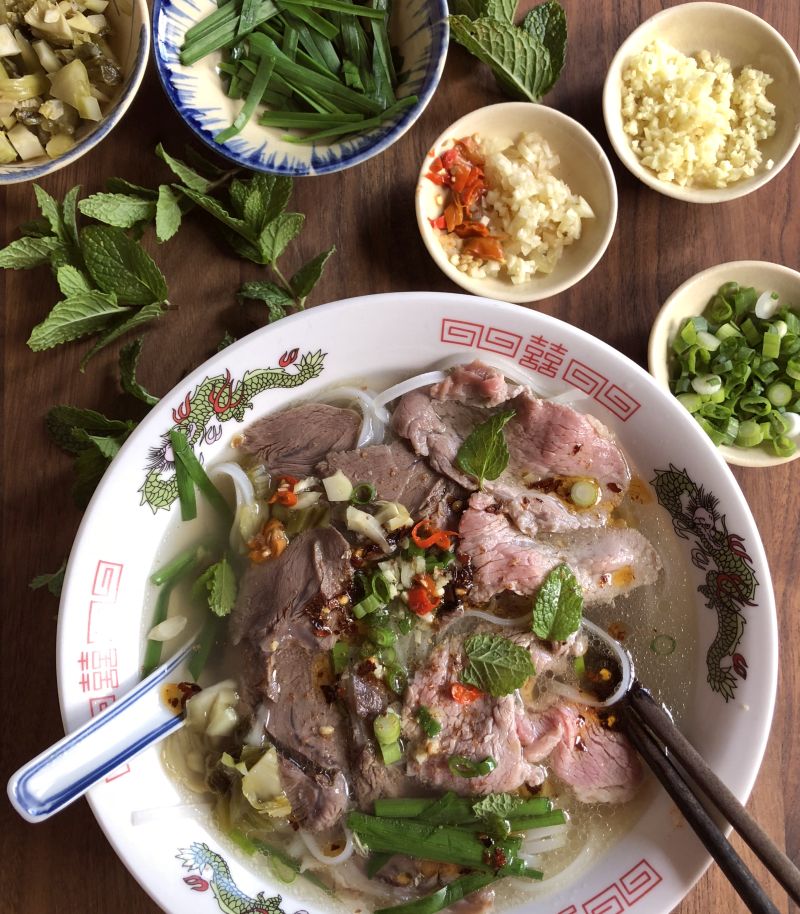
In Georgia Freedman's book, Cooking South of the Clouds, she titles this recipe as "Beef Noodle Soup" -- its translation from Chinese characters. In the recipe introduction, she refers to it as being "exactly the same soup that is called pho just a few miles down south, in Vietnam." For that reason, I've decided to add "Yunnan pho" to the title to give it more of a spotlight. If you don't have Sichuan peppercorn, use black pepper like the Viets do! For information on the spices, see the Pho Spice Blend.
1 1/2 pounds beef leg bones (such as knuckle bones)
2 Chinese black cardamom pods (cracked open with a meat mallet)
2 star anise (16 robust points total)
1 teaspoon fennel seed
1 tablespoon fine sea salt
4 large handfuls fresh rice noodles or 12 ounces dried flat rice noodles (such as pad thai or banh pho)
6 to 12 ounces raw beef steak (such as sirloin or culotte, sliced very thinly (use maximum if not using cooked shank in bowls))
1 bunch of fresh mint
1 handful garlic (Chinese chives, blanched, rinsed in cold water, and cut into 1-inch pieces)
4 slender green onions (white and green parts, thinly sliced)
Minced garlic mixed with water to cover by 1/2 inch (or Pho Garlic Vinegar)
2 tablespoons minced peeled ginger
1 cup chopped Fermented Chinese Mustard Greens (include some of the chile and garlic, for extra punch)
Soy sauce
Zhenjiang vinegar or 2:1 blend of balsamic and apple cider vinegar
Dried chile flakes
Homemade Chile Oil
Ground toasted Sichuan Peppercorn
Pickled chiles
Categories
Main Course
Cuisine
Chinese
Vietnamese
Steps
To cook the broth in a 6-quart pressure cooker, put the beef shanks, bones, cardamom, star anise, and fennel in the pot, then add 7 1/4 cups water (use 8 cups water for a multicooker such as a Fagor Lux or Instant Pot). Lock on the lid and bring to high pressure. As needed, adjust the heat to maintain pressure. Let cook on high pressure for 20 minutes, then turn off the heat (or unplug the multicooker). Let naturally depressurize for 15 minutes on a cool burner (allow a multicooker to depressurize for 20 minutes), then release residual pressure. (When cooking in a regular large pot, bring the shank, bones and 12 cups water to a boil. Skim any foam on the surface, before adding the spices. Adjust the heat to simmer for 3 to 4 hours.)
Regardless of method, when the broth is done, remove the shank from the pot and let sit in a bowl of water for 10 minutes to cool, then strain and let the meat cool. Strain the broth through a fine mesh strainer or better yet, line the strainer with muslin for super clear broth! Remove as much fat as you like, then add the salt. You should net about 8 cups of broth; if needed, boil the broth to concentrate the flavor or add water to dilute. (The beef and broth can be refrigerated up to 4 days before using.)
If using the cooked beef, thinly slice the meat across the grain and set aside. In a large pot of boiling water, cook the noodles until soft and chewy, then drain and divide between four noodle soup bowls. Arrange the sliced cook beef and steak on top.
Bring the broth a boil and ladle about 2 cups of broth into each bowl. Serve with the topping options at the table.