Learn how to make lacto-fermented pickles! An easy method for flavorful, crunchy, tangy, garlic dill pickles with only 15 minutes of hands-on time. Full of healthy, gut-healing probiotics these little guys are perfect as a low-calorie snack, or sliced and added to sandwiches.
Recipe by Sylvia Fountaine | Feasting at home on August 22, 2019
2- 2 1/2 lbs pickling cucumbers– all similar size ( 5 inches)
5 cups filtered water or tap water (that is not overly chlorinated)
2 tablespoons fine sea salt or Himalayan salt (or basically one heaping teaspoon fine sea salt (7 grams) per one cup of water, to make a 3% brine.) * see notes.
1/4 teaspoon turmeric (optional, adds a “fresh” flavor)
1 teaspoon each: fennel seeds, coriander seeds, allspice, peppercorns, dill seeds, mustard seeds, celery seeds- and feel free to add more peppercorns!
10-20 garlic cloves, sliced (or double for extra garlicky)
1/2 onion, thinly sliced (optional)
big handful of fresh dill
1-3 fresh red chilies – or dried arbol chilies, or add chili flakes (all optional)
3-4 bay leaves (or a grape leaf or oakleaf) – these are sources of tannic acid to help them stay crisp.
Categories
fermented
Cuisine
American
Steps
Rinse the cucumbers, remove 1/16-inch of the flower end of each cucumber (keeps them from getting soft) and place them in an ice-water bath, to crisp them up (15-30 minutes). Leave them whole.
Mix the salt (2 tablespoons) and 5 cups cold water until dissolved.
No need to sterilize, just clean!
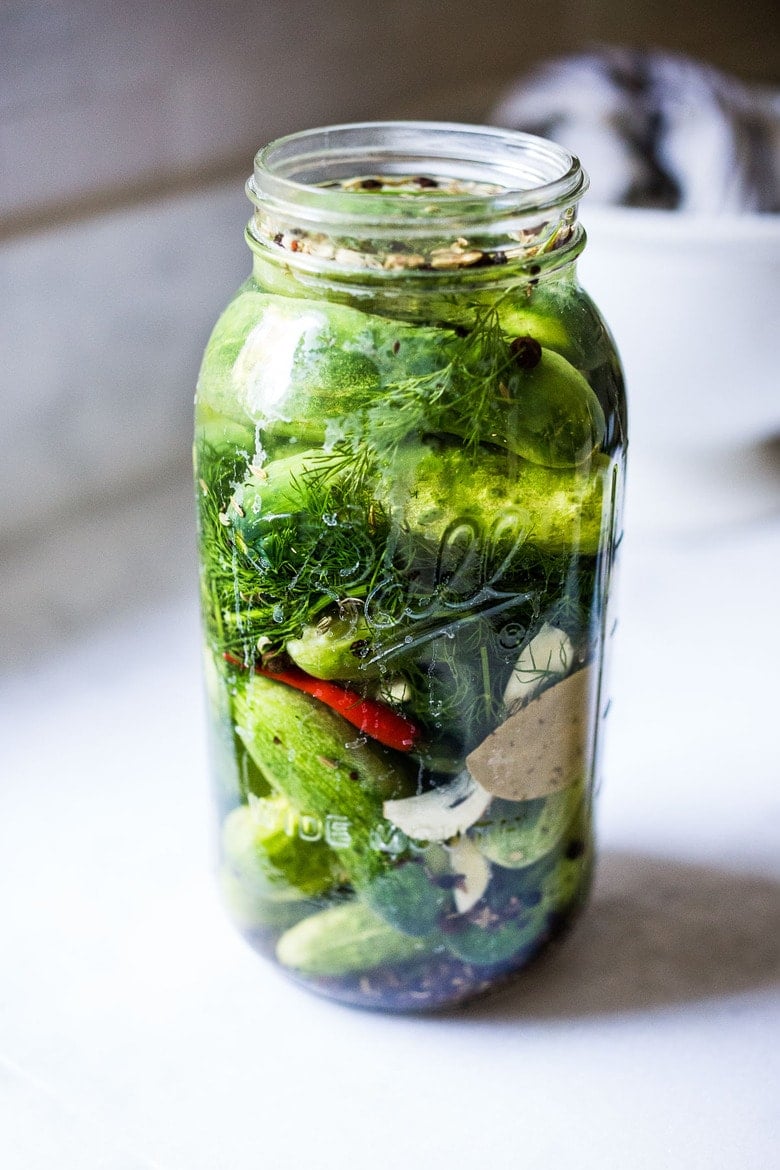
In a large, clean two-quart mason jar, place all the whole spices into the bottom. Add the dill, garlic and onions or turmeric if using. With clean hands, pack one layer of cucumbers tightly, standing on end, then add the bay leaves, then add the second layer of cucumbers standing on end. Press everything down, leaving 1 ½ inches of headroom. Pour the saltwater brine over the top and weigh down the cucumbers with fermentation weights so they are submerged under the brine. Remove any spices that may have floated to the surface (which can mold). Cover the jar loosely with a lid or with a cloth- basically, the pickles will bubble and you want air to be able to escape.
Place the jar in a pan or bowl to collect any overflow and leave it in a cool dark place (60-70F) for 2 -3 days (a basement, or lower kitchen cupboard) and check for bubbles or overflow, indicating fermentation. Half-sour pickles will take 3-5 days with crisp, white interiors. If is colder than 65F, it may take longer, if hotter, they will ferment faster. Full sour pickles will take 14-21 days (see notes for a stronger saltwater ratio).
After 2 days, check for signs of life: bubbles, overflow, or clouding. Tap the jar, and see if tiny bubbles rise to the top. I usually ferment for 3-4 days- I like crunchy pickles! Longer ferments will yield tangier pickles but will get softer as they ferment, and lose their vibrant color. Up to you. You can taste them at any point after you see bubbles, and ferment longer if you like. The brine will get cloudy as it ferments- this is a good sign! Once you see active bubbles, you can at this point place the jar in the fridge, where it will continue to ferment, but much more slowly. Keep the pickles submerged.
Once chilled, give them taste. They should be crispy and flavorful with a little tang. (At this point, if you want a tangier or softer pickle, you can absolutely pull them back out again and ferment for a few more days longer if you want.)
If you like fizzy brine, tighten the lid, burping every week or so or try using an airlock. If you don’t want to think about it, give the lid one loose twist, so it’s on there, but gases can escape.