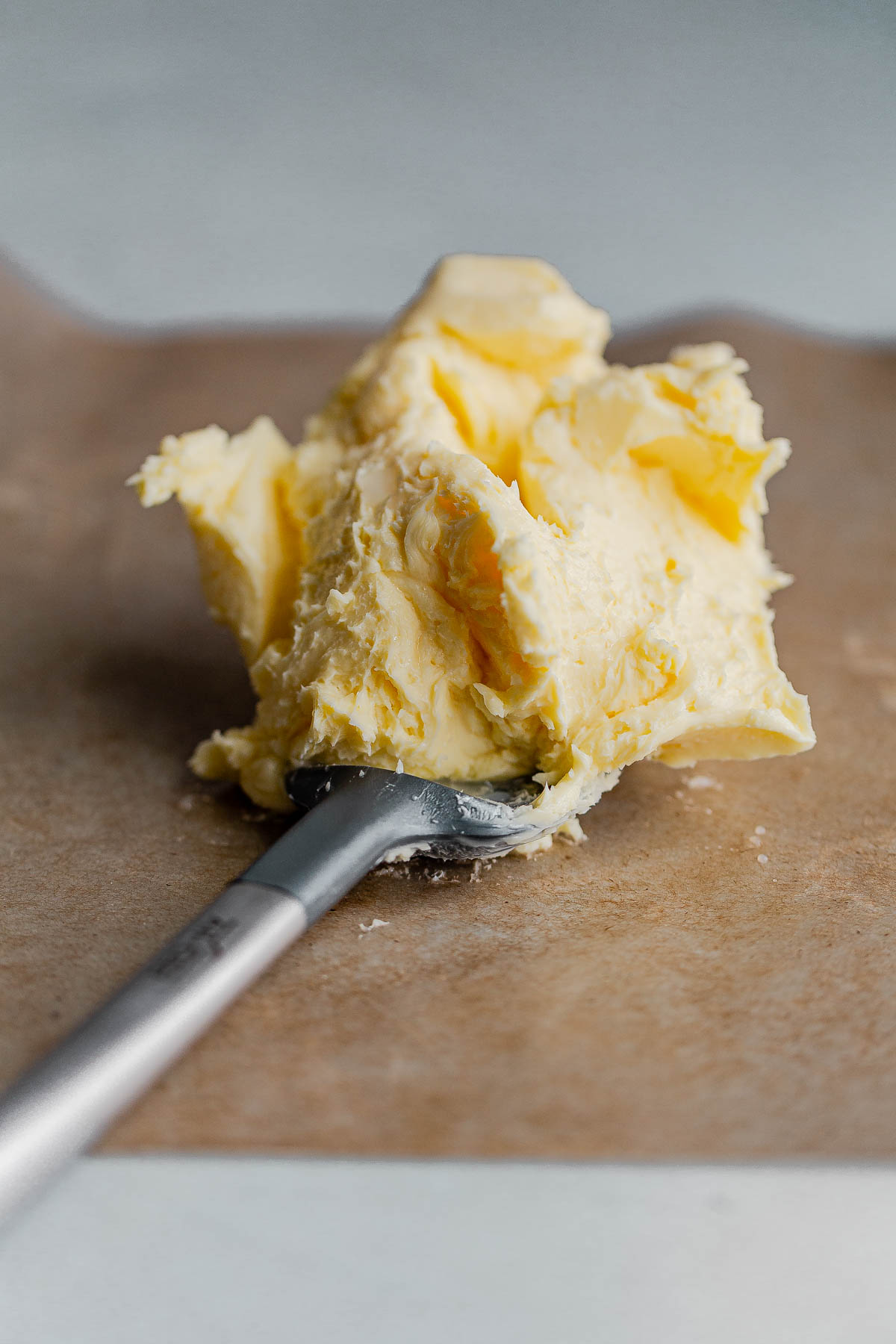
Learn how to make cultured butter (and real buttermilk) at home with this easy recipe and how-to guide. Cultured butter has a distinct tangy flavor and can be easily substituted for regular butter in your favorite recipes.
Recipe by Laura // A Beautiful Plate on October 22, 2019
Prep time: PT2880M
Cook time: PT20M
Total time: PT2900M
Rating
4.85 stars (39 reviews)
Keywords
cultured butter, how to make cultured butter, what is cultured butter
Ingredients
1 quart (4 cups; 960 mL) high quality heavy cream (not ultra pasteurized; no stabilizers added)
3 tablespoons (45 mL) cultured buttermilk
¼ teaspoon kosher salt (optional)
Categories
Cooking Technique Guides
Cuisine
American
Steps
Culture the Cream: Combine the cream and culturing agent (cultured buttermilk, plain unsweetened yogurt with live cultures, or cultured sour cream or creme fraiche) in a lidded container. Stir to combine.
Allow the cream mixture to sit at room temperature, between 70°F to 75°F (21°C-24°C), for at least 24 hours and up to 48+ hours. The mixture will thicken and have a stronger, more pronounced tangy flavor as it sits. It will sour and become significantly thicker in texture with time.
Transfer the cream mixture to the refrigerator and chill for at least one hour. This will ensure that the butter fat will stay firm and not become greasy during churning.
Churn: Place the chilled cream mixture in the bowl of stand mixer fitted with a whisk attachment (note: you can also use a large food processor or even shake the cream by hand if you're up to it!). Cover the stand mixer with a clean kitchen towel (this will help prevent any splattering) and whip over medium-high speed until the mixture has thickened and has the texture of a soft whipped cream.
Reduce the mixer speed to medium-low and continue whipping until the liquid and butter fat just begin to separate and it looks curdled. Reduce speed to low - be sure to cover the mixer as it can splatter considerably at this stage - and continue whipping until the butter comes together as a solid mass on the whisk attachment.
Strain: Set a large fine-meshed sieve over a large mixing bowl. You can line the sieve with muslin, but I do not find this step necessary. Gently pour over the liquid (this is real buttermilk) then transfer the mass of butter to the sieve. Using a spatula, gently press the butter against the sieve to release any additional liquid - without pushing the butter through the sieve. Transfer the homemade buttermilk to a covered container and refrigerate. The buttermilk can be stored in the fridge for one to two weeks.
Wash: Meanwhile, transfer the mass of butter to the now empty mixing bowl. At this step, we will wash the butter repeatedly with very cold water, pressing the butter to release any excess buttermilk. Strain, wash, repeat. The cold water helps to firm up the butter and washing helps press out any excess buttermilk from the butter, which will extend it's storage life in the fridge.
Pour 1 cup (240 mL) of very cold water over the butter and using the back of a spatula (or spoon), press the butter repeatedly against the edge of the bowl. Drain, discarding any liquid, and repeat until the water runs clear. This will take anywhere from 4 to 6 washes. Be sure to err on the side of overwashing. Once the water runs clear and you have drained the liquid, press the butter once more to release any excess water. If you desire, you can use clean hands to do this - but it isn't necessary or required.
Add Salt If Desired: At this stage, you can choose to mix and stir in salt or other seasonings, if desired. I prefer not to salt my cultured butter (and sprinkle salt after using, etc.) as it can mask the tangy flavor.
Store: Divide the butter in half - this recipe yields roughly 12 ounces of cultured butter - shape as desired, wrapping the butter in wax paper. Store well-wrapped in the refrigerator for up to a month (or longer) or freeze for later use.
Nutitrion
Serving Size: 1 serving
Calories: 274 kcal
Carbohydrates: 2 g
Protein: 2 g
Fat: 29 g
Saturated Fat: 18 g
Cholesterol: 108 mg
Sodium: 82 mg
Sugar: 1 g
Unsaturated Fat: 9 g
Reviews
Sheila Davies on 2026-05-16 (5 stars): Love your easy, clear instructions (less complicated than some I've read). Another healthy ferment for the gut microbiome 😃. Will be starting my fist attempt today 😋
Dominica Bogar on 2026-05-07 (5 stars): So good! The butter is slightly sour on its own, but on toast, you can't taste the sourness, and it is much lighter than normal butter! However I don't love keeping out of the fridge, the texture is much softer than normal butter when kept out of the fridge.
Lady Laura Newman on 2026-03-18 (5 stars): WOW!!! Here is my story. I bought 2 quarts of whipping cream in November with the intention of making chocolate and vanilla ice cream for Christmas. However, I came down with Covid19 on 17th December and just as I was beginning to feel better in early January, I slipped on the ice and broke my left leg. After more than two months I am able to walk carefully in the house and I am getting back into doing fun things. I found your recipe for cultured butter and decided to give it a try. May I say again, WOW! I followed your instructions and left the whipping cream mixed with yogurt in a large Vlasic pickle jar on the counter for about 45 hours. I just finished whipping up a bit more than 1.5 pounds of butter and got 1 quart of buttermilk as well! I am eating fresh from the oven Cornish split sweet buns with fresh butter and raspberry jam and sipping a cup of English breakfast tea. Thank you so much for posting your recipe for the cultured butter. You have changed my world!!
Ash on 2026-03-03 (5 stars): Yes i made with plain greek yog today works wonderfully x
Ash on 2026-03-03 (5 stars): Love this recipe works well easy to follow x
Shannon on 2025-12-18 (5 stars): This butter turned out beautifully. Creamy, tangy, and it whipped up in no time at all. Brilliant recipe!