1 3/4 cups vegetable broth (a yellow broth is best), divided
50 large grape leaves (fresh or jarred)
Salt and pepper
1/2 cup extra virgin olive oil
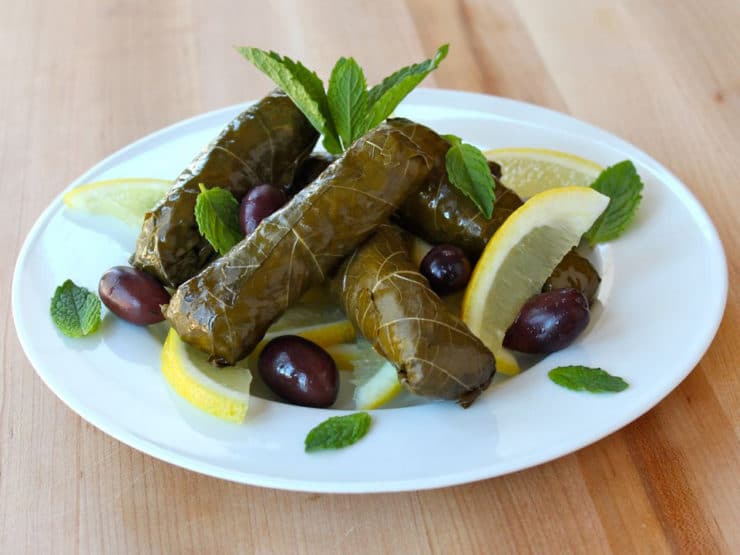
Fresh mint leaves, lemon slices, and olives (for garnish - optional)
Categories
Main Course
Cuisine
Mediterranean
Steps
Pour the pine nuts into a skillet and lightly toast them over medium heat till golden brown. Reserve.Pour ¼ cup of olive oil into a medium pot and heat it over medium. Add minced onion to the pot and sauté until soft. Add the rice to the pot and stir to combine. Sauté for another minute. Pour in ¾ cup vegetable broth and lower the heat; simmer the rice uncovered for about 10 minutes till the liquid is absorbed and the rice is half cooked. Do not cook the rice fully, or you’ll end up with mushy grape leaves! Just cook it to an al dente texture. Remove pot from heat.
Add the minced dill, mint, toasted pine nuts, 2 tbsp fresh lemon juice and lemon zest to the pot of rice. Stir till all ingredients are well combined. Season with salt and pepper to taste. Let the mixture cool to room temperature.
Fill a large pot with salted water and bring to a boil. As the water is heating, trim the leaves by cutting the stems off, flush with the leaves. Trim any large, hard veins from the leaves. Place the leaves in the boiling water and let them soften for 3-5 minutes till they become pliable (fresh leaves may take a bit longer to soften than jarred).
Drain, then cover the leaves with cold water. Drain the leaves again and pat them dry.Note: If using fresh leaves, try to use younger leaves (medium size)—they’ll be more tender than the very large leaves.
Place a grape leaf shiny (smooth) side down, vein (bumpy) side up, on a flat surface like a cutting board.
Place 2 tbsp of rice filling at the base end of the leaf, near where the stem was.
Fold the stem end up over the filling.
Fold the edges of the leaf inward.
Continue rolling the leaf till it forms a neat rolled package. Do not roll too tightly; the rice will expand a little during cooking, and if you roll it too tight the leaf will unravel as it cooks.
Squeeze the roll gently to seal.Repeat the process with the remaining leaves till all of the filling is gone.
As you roll the leaves, you may find some leaves that are damaged or have large holes. Place those damaged leaves into the bottom of your saute pan to line it and create a bed for the stuffed leaves.
Place the stuffed leaves in the bottom of the saute pan. Don’t be afraid to pack the leaves snugly; this will help keep the leaves intact as they cook. Make a single layer on the bottom of the pan. When you run out of room, make a second layer on top.
Pour 1 cup of broth, ¼ cup of extra virgin olive oil, and ¼ cup of fresh lemon juice over the stuffed grape leaves. Heat the pan over medium until it begins to simmer (don’t boil, or the leaves will start to fall apart).Cover the pot. Let the grape leaves cook for 30-40 minutes. The leaves are finished cooking when they are fork-tender.
Stuffed grape leaves can be served warm or cold, as-is or topped with a variety of sauces. I like serving them with fresh tzatziki or tahini sauce—recipes for both can be found on my blog. Store them in the refrigerator; they will keep for about 1 week.
Nutitrion
Serving Size: 1 serving
Calories: 106 kcal
Carbohydrates: 11 g
Protein: 1 g
Fat: 6 g
Sodium: 67 mg
Reviews
Dana on 2021-12-11 (5 stars): These were fantastic - made them for a greek themed dinner party and they were enjoyed by all. Dealing with the grape leaves was time-consuming but everything else was very easy. My grape leaves came in a jar with brine so I rinsed but did not cook or blanch before stuffing and cooking. They came out perfectly.
In the picture above you show a plate over the dolmades but don't explain what that is about in the written instructions (unless I missed it) I saw that technique on another recipe so knew what to do.
I can not wait to make these again!
Kerri on 2021-03-28 (2 stars): Super disappointed in this. While the taste was there, boiling the grape leaves made them tear just by looking at them. I tried another recipe that was similar in flavor profile, and all you did was rinse the leaves, and ended up with a much better result. Even with so many leaves tearing and being unusable, there still wasn't nearly enough filling for the rest of my grape leaves, so the scale isoff on this, also.
Margot Henel on 2020-12-20 (5 stars): These were great! I squeezed lemon juice over them and put them in the fridge. Even better the next day! Thank you!
Anthoula on 2019-11-10 (5 stars): Followed recipe, turned out great. I used frozen grape leaves left over from summer. Recipe was easy to follow and it smelled delicious. Have not tried them yet, but am sure I will not be disappointed. Reliable recipe!! Thank you.
lynda on 2019-08-29 (5 stars): i froze my grape leaves this year in zip lock bags and laid them flat with warnings "do not put anything on top of these" they are so much easier to roll after they freeze..i layered paper towels in between layers and works wonderful also the recipe is very good first time i have made them but have tasted them before! we live near Edmonton where our weather gets to near 40 below and have been growing grapes for 30 some years and mostly only made jelly with the grapes until someone made and gave us a some to try ......and we loved them! They called them Dolmades!