
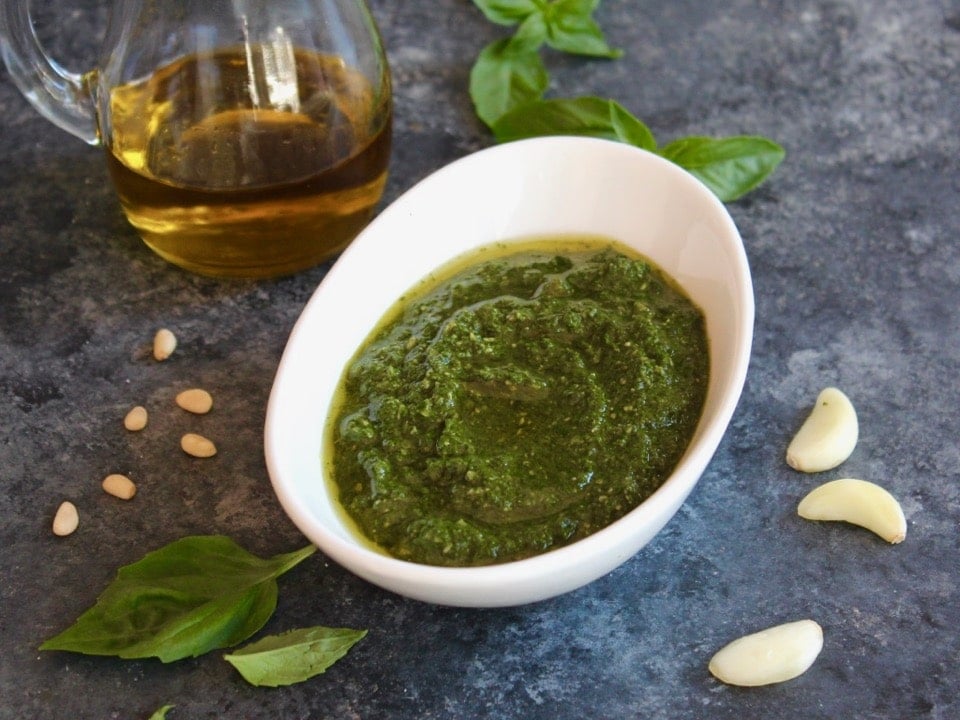
Traditional method for authentic Mediterranean pesto with basil, garlic, pine nuts, and olive oil using a mortar and pestle - or an immersion blender! Recipe can be made with cheese or without.
Prep time: PT30M
Cook time: PT20M
Total time: PT50M
4.59 stars (12 reviews)
pesto
- If you are using roasted garlic, roast your cloves prior to making your pesto. For instructions, click here: How to Roast Garlic. If using raw garlic, be sure to cut out the green inner part of each clove with the tip of a sharp knife. Also plan to give yourself some time to separate the basil leaves from the stems - it takes a while to complete this preparatory step, but it's necessary. You really don't want stems or flower buds ending up in your pesto.
- In this post, you'll see the mortar and pestle that I own. It’s a splurge, for sure. It was shipped from Italy in record time. I cherish it and use it all the time. The maker offers many different sizes. I recommend using at least a 7 inch for pesto, and at least 8 inch is even better. For reference, mine is 9 inches.
- First, add your garlic and a very small pinch of salt to the mortar. Use 1 clove for a typical pesto, or 2 cloves for a more pungent, garlicky pesto. Use roasted cloves for a slightly sweet pesto, devoid of sharpness, that is easier to digest.
- Use the pestle to pound and grind the garlic into a smooth paste, coating the interior of the mortar with smears of garlic.
- Next, begin adding your basil. I always add basil early on in the pesto process, because it is the hardest ingredient to pulverize, and you will need the scraping traction of the interior of the mortar walls to help break it down. Start with about a third of your pesto leaves, and another very small pinch of salt.
- Grind the leaves against the walls of the mortar, using a rotational movement of the mortar and pestle to pulverize them as best you can. It will take some time and patience. Have a small silicone spatula handy to scrape the pestle, as well as the edges of the mortar, from time to time. Juice will begin to collect in the bottom of the mortar as the cells of the basil get broken down. Continue adding more leaves, repeating the process until all of the basil has been broken down.
- You're looking for your basil to be mostly pulverized, without pieces of leaves or stems in the mix. If it doesn't seem to be breaking down fast enough, add a little more salt - but careful, if you're adding cheese later the pesto can turn overly salty very quickly.
- At this point, add your pine nuts. You can add them straight to the mortar and grind them into the basil, which is what I usually do. Some cooks like to hand-chop the pine nuts, then stir them in for a more rustic texture.
- As you continue to grind, the pine nuts will give a slightly creamy texture to the pesto. By now, your pesto will be quite thick.When your pine nuts are fully incorporated and broken down to very small bits, you're ready to add fresh lemon juice. Stir in about a tablespoon of juice. This will brighten the flavor of your pesto. The lemon also helps to keep it fresh and bright green.
- Now it's time to stir in your olive oil. Use your spatula for this step. I usually use about 1/4 cup or so for a batch of this size. You'll want to add olive oil until the pesto is glossy with a lovely sheen. The oil should almost pool on the surface of the pesto.
- Scrape the sides of the mortar with a spatula and stir well. At this point, you have a basic, authentic pesto - about 1/2 cup or so (or around 3/4 cup if you've added cheese). If your pesto is cheese-free, add salt to taste at this point - the salt really enhances the flavor and helps to balance everything.Some people like a thicker pesto, while others prefer a more liquid pesto for drizzling. If you’d like a more liquid texture, add more olive oil by the tablespoon until you have the desired texture. Your pesto is now ready to serve.
- You'll need your immersion blender and a half gallon mason jar. Add your basil, garlic, lemon juice, 1/4 cup olive oil, and a pinch of salt to the jar.Use your immersion blender to begin pulverizing the ingredients inside the jar, moving the blender up and down and in swirling motions to chop up the ingredients.
- Scrape the blender with a spoon periodically to free up the blades.
- Continue blending for a few minutes, until the basil is very well chopped with no stem bits or leaves present.
- Add the pine nuts to the jar and continue blending until well incorporated. I save this part for last, so that the pine nuts don't become so pulverized that they take on the texture of nut butter. I like them broken down to little creamy bits, so that the pesto retains some texture.At this point, you'll have about 1/2 cup of pesto. If you're keeping the pesto dairy free, add salt to taste at this point (the salt really helps the flavors to pop). Don't add salt now if you're adding cheese.
- Some people like a thicker pesto, while others prefer a more liquid pesto for drizzling. If you’d like a more liquid texture, add more olive oil by the tablespoon until you have the desired texture. Add more salt to taste, if desired. Your pesto is now ready to serve.