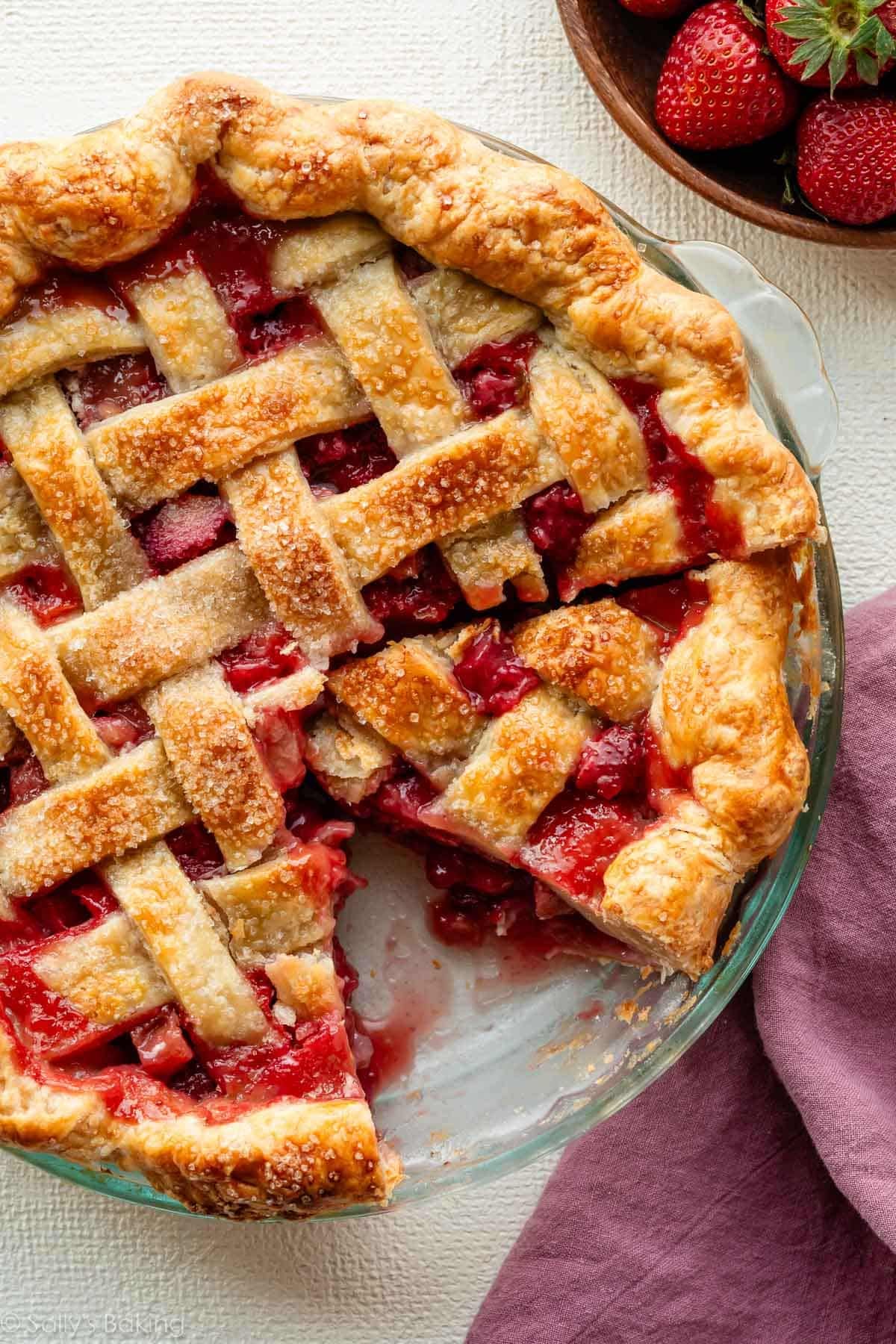
Follow this simple recipe and video tutorial for the best all butter pie crust. It will make you a pie expert immediately! Complete with all my tips and troubleshooting, this pie crust recipe is buttery, flaky, and tender with the most incredible flavor. This recipe is also in my cookbook, Sally's Baking 101.
Recipe by Sally on October 25, 2018
Prep time: PT20M
Total time: PT2H20M
Rating
4.7 stars ( reviews)
Keywords
pie crust
Ingredients
2 and 1/2 cups (313g) all-purpose flour, plus more as needed (spooned & leveled)
2 teaspoons granulated sugar
1 teaspoon salt
1 cup (16 Tbsp; 226g) unsalted butter, chilled and cubed
1/2 cup (120ml) ice water, plus more as needed
Categories
Pie
Cuisine
American
Steps
In a large bowl, whisk together the flour, sugar, and salt together. Add the cold cubed butter on top. Using a pastry cutter, food processor, or two forks (pastry cutter is ideal, see post above), cut or pulse the butter into the dry ingredients until it resembles coarse meal. You’re looking for pea-sized bits of flour-coated butter. A few larger bits of butter is OK.
Drizzle the cold water over the surface of the flour mixture, 1 Tablespoon at a time, and stir after each addition. Stop adding water when the dough comes together easily and begins to form large clumps. The dough will feel moist and a little sticky, but not feel overly wet. Do not add any more water than you need to. I always use about 1/2 cup (120ml) of ice water.
Transfer the dough to a lightly floured work surface. Using floured hands, gently bring the dough mixture together into a ball. Avoid overworking the dough. If it feels too dry or is too crumbly to form a ball, dip your fingers in cold water and then continue bringing the dough together. If it feels too sticky, sprinkle on a little more flour and continue bringing it together. Using a sharp knife or bench scraper, divide the dough in half. Using your hands, gently flatten each half into a 1-inch-thick disc.
Wrap each disc tightly in plastic wrap and refrigerate for at least 2 hours and up to 5 days before using in a pie recipe.
After refrigerating, the dough is ready to roll out and use in a pie recipe. Proceed with the pie per your recipe’s instructions. TIP: When rolling out the chilled pie dough discs, use gentle force with your rolling pin. Start from the center of the disc and work your way out in all directions, turning the dough with your hands between rolls. Smooth out the edges if you notice cracks. (See video.) Keeping your work surface, rolling pin, and hands lightly floured makes rolling out easier.
Reviews
Tyler on 2026-03-15 (5 stars): Hi Sally! I made this recipe it was amazing! I did a small pie dough experiment and was curious about your thoughts. I tested two methods: grating frozen butter with a cheese grater vs. cutting the butter in with a pastry cutter. I made the test dough and baked it alone just simple test dough squares. The grater method produced the best uniform flake while the pastry cutter was less uniform but better structure for heavier fillings.
I’ve always loved using frozen grated butter for biscuits because the flakiness is on a whole different level, but I’m not sure if it’s structurally strong enough for custard pies or wetter fillings.
Out of curiosity, which method do you and your team usually prefer for pie dough, especially when structure matters? I’d love to hear what approach you recommend.
Jo on 2026-04-20 (4 stars): I made the pie crust on Wednesday night.Very easy recipe to follow.I chilled the bowl with the flour and i froze for a bit my butter and the water so they would be extra cold.I didn't overworked the dough (i know better than that.)So yesterday i open my dough and i put it in the freezer after and i blind baked it.I had the same issue with others.I baked it in a removable cake tin and the butter run down from the tin into the oven.The pie crust shrunk a bit, even though i froze it before.And i used weights.But otherwise it turned out good.I made my chicken pot pie and i had the same issue with the top pie crust as i was baking it.This time i already put a tray underneith it (because i though that the filling could leak.)I had a pool of melted butter on the tray.The paradox is that the crust came out perfect.very flaky, very flavourful and airy.The bottom as well baked perfectly.I will definitely will give it another go, with this time i will make the butter pieces smaller.I have to say that i read all the comments because this is the first time something like this is happening.
TC on 2026-05-10 (1 stars): Same issue as a lot of people, oily/buttery mess. I followed the recipe exactly-purchased a dough cutter, chilled overnight, etc. This one isn’t it unfortunately
Jeanne Dagradi on 2026-06-04 (5 stars): I forgot to mention in my previous comment how I grew up never making pie crust, and thought it was a bit intimidating. Then I learned the importance of taking time to make the same recipe multiple times, rereading the recipe, being careful to follow each step which is included for a reason. Be curious, enjoy the process, the journey led me to thoroughly enjoy gathering the ingredients, measuring, mixing, rolling, placing, sharing this fabulous pie crust with family and friends.
Thank you, Sally!
Jeanne
Lindsey on 2026-06-16 (5 stars): This is the only pie crust I ever make. It comes out perfect every time and has a wonderful flavor! I'm secretly happy when I make a single crust because I can bake the extra crust and eat it all on its own or crumble it and mix it in ice cream.
Pam Morrow on 2026-06-19 (5 stars): I have used this recipe successfully in the past and it was great. But, I've recently seen where people use buttermilk in pie crust dough. Is this something that you have tried and what are the benefits?