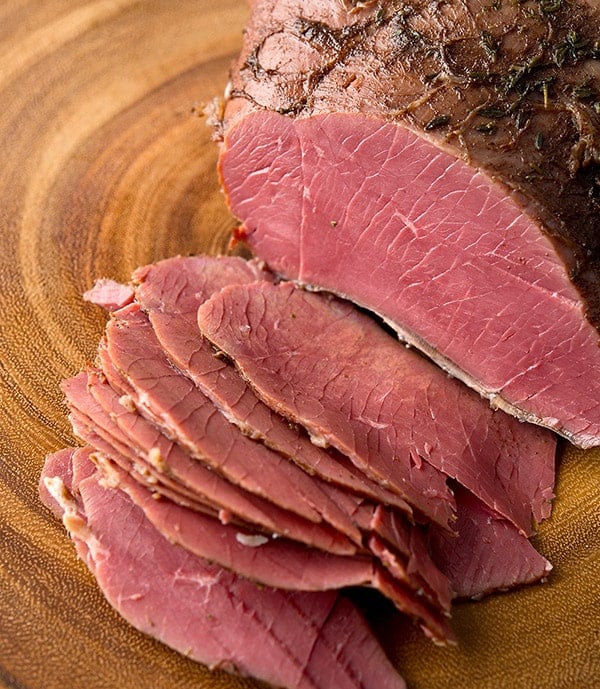
So obviously this recipe works with all cervids, antelope, deer, moose, elk, etc. It will also work with beef and lamb, of course, but also bear and even pork -- where the effect is essentially a boiled ham.
Prep time: PT20M
Cook time: PT180M
Total time: PT200M
Rating
4.98 stars (157 reviews)
Keywords
lunch meat, pickled foods, venison
Ingredients
1/2 gallon water
1/2 cup kosher salt
1/3 cup sugar
1/2 ounce Instacure No. 1 ((sodium nitrite))
1 tablespoon cracked black pepper
1 tablespoon toasted coriander seeds
6 bay leaves, (crushed)
1 tablespoon mustard seeds
1 tablespoon dried thyme
1 teaspoon caraway seeds
1 cinnamon stick
5 chopped garlic cloves
A 3 to 5 pound venison roast
Categories
Cured Meat
Main Course
Cuisine
American
Steps
Add everything but the roast to a pot and bring it to a boil. Turn off the heat and cover, then let it cool to room temperature while covered. This will take a few hours. Meanwhile, trim any silverskin you find off the roast. Leave the fat. Once the brine is cool, find a container just about large enough to hold the roast, place the meat inside and cover with the brine. You might have extra, which you can discard.
Make sure the roast is completely submerged in the brine; I use a clean stone to weigh the meat down. You can also just flip the meat every day. Cover and put in the fridge for 6 to 7 days, depending on the roast's size. A 2-pound roast might only need 4 days. The longer you soak, the saltier it will get -- but you want the salt and nitrate to work its way to the center of the roast, and that takes time. Err on extra days, not fewer days.
After the alloted time has passed, you have corned venison. To cook and eat, put the roast in a pot just large enough to hold it with the brine. Simmer gently -- don't boil -- for at least 3 hours and up to 5 hours. The meat itself will be cooked in an hour or less, but you want the sinews and connective tissue in the roast to soften and that takes time.
Eat hot or cold. It is absolutely fantastic with good mustard and some sauerkraut on a sandwich.
Nutitrion
Serving Size: 1 serving
Calories: 32 kcal
Carbohydrates: 7 g
Protein: 1 g
Fat: 1 g
Saturated Fat: 1 g
Sodium: 4725 mg
Sugar: 6 g
Reviews
CathyC on 2026-02-02 (5 stars): Loved it! And yes, I did modify it to fit our family - no nitrate salt. To stay safe I cut the roast into 1 pound slices and brined it for 2 days - the smaller hunks of meat allowed the brine to fully penetrate it in the shorter time span. Followed the rest of the recipe exactly as written. Delicious! thank you for the excellent information and guidance on cooking wild game, we appreciate you.
Brian W on 2025-12-14 (5 stars): thank you sir! This gave me another great way to silence the "venison is so gamey" critics. I had three bottom rounds (5 lbs total) from last years harvest that I usually save for jerky. I brine all 3 of them in the corned venison brine for 7 days. I finished 2 as corned beef and then coated one with the coriander and black pepper rub that you note in your pastrami recipe. I smoked it to an internal temp of 145. Both turned out wonderful. I really wish I could add pictures! I have read a lot about the difference between corned venison and pastrami is that after the brine the pastrami is smoked instead of simmered. Is this true? I noticed your pastrami recipe/brine is different. thanks again!
NIki on 2025-12-11 (5 stars): We made this with a 2 pound sirloin roast and it came out fantastic! We omitted the cure no.1 but otherwise followed the recipe to a T. The color is notably more grey than the pink shown in the photo above, due to the absence of cure but the color doesn't bother us. Still tasted great. Thanks for another solid recipe!
Mary on 2025-11-15 (5 stars): Wow! I made this today with pronghorn and it is delicious. I can’t wait to try it with some mustard on a cracker.
Thanks again for another delicious recipe!
Robert on 2025-11-05 (5 stars): If I use say, five-1 lb pieces of venison vs one 5 lb roast, does that change anything? Timing? Thanks!