
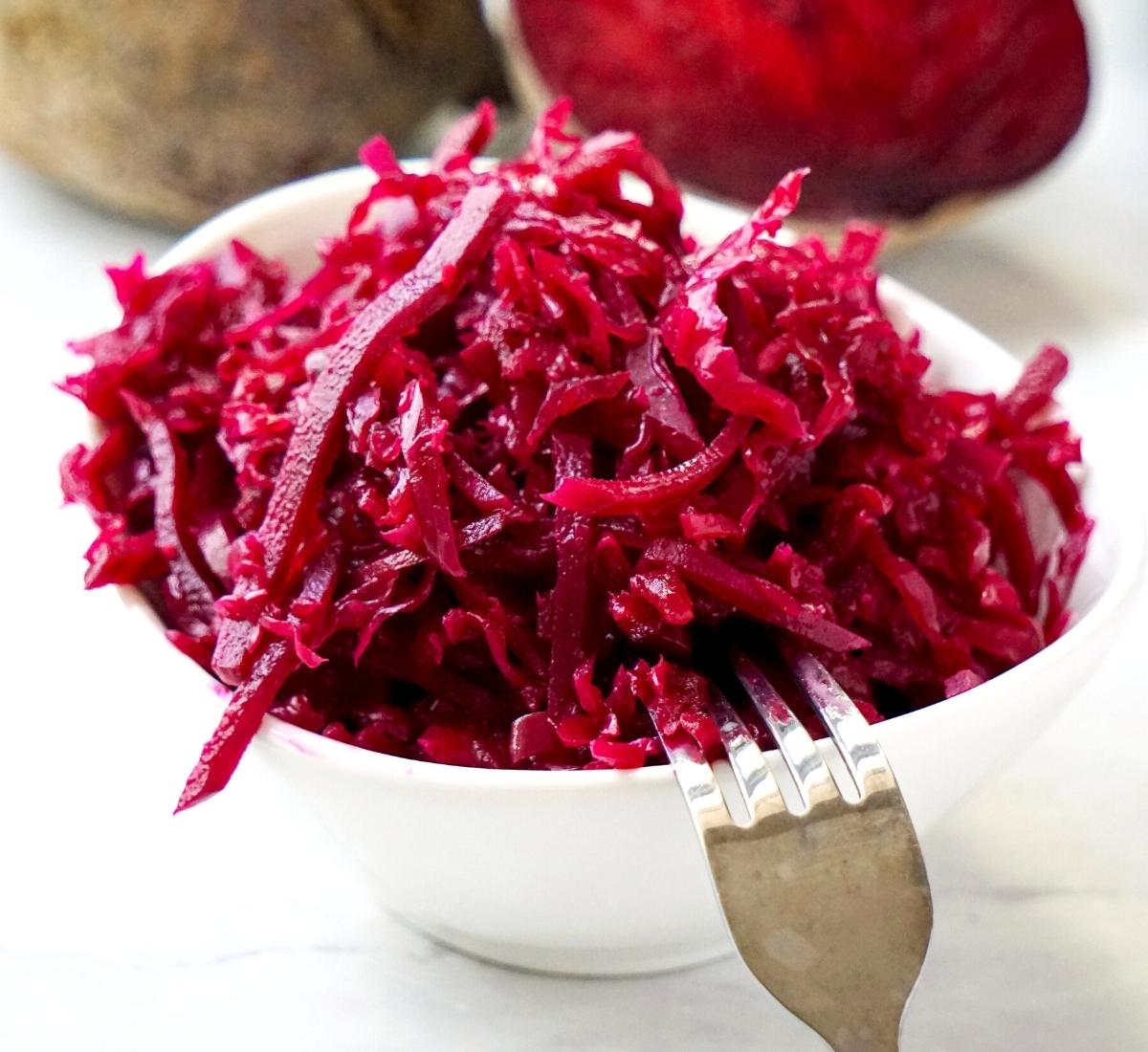


Crispy, crunchy, sour fermented beetroot and red cabbage. This fermented beet sauerkraut recipe uses a combination of raw beetroot, cabbage (white or red), apple, ginger and garlic. The versatile beetroot kraut can be tossed through salads and piled on top of your avocado toasts or even served along roast meat or fish.
Prep time: PT30M
Total time: PT7230M
5 stars (3 reviews)
beet and cabbage kraut, beet and cabbage sauerkraut, beet sauerkraut, beet sauerkraut benefits, beetroot fermentation, beetroot kraut, beetroot sauerkraut, beetroot sauerkraut recipe, fermented beetroot, fermented beets, fermented beets and cabbage, fermented beets benefits, fermented beets recipe, lacto fermented beets, lacto fermented beets recipe, red cabbage and beet sauerkraut, red cabbage and beetroot sauerkraut, sauerkraut with beets
- Wash the cabbage really well in cold running water, remove and discard any discolored outer leaves. Wash and peel the beets, ginger and garlic. No need to peel the apple.
- For this I’m using a mandoline to julienne the beets and apples, and thinly shred the cabbage. Or julienne with a chef’s knife. All separate. The ginger and garlic will be thinly grated also, the smaller the better.
- Transfer the shredded cabbage to a large bowl with plenty of space for you to get your hands in and mix it around. Leave your beets and apples to the side for now. Add salt. You’ll want to use a really nice, coarse, unprocessed good quality salt, like this Celtic Sea Salt.
- Massage the cabbage with your hands until it breaks down and becomes soft (about 3 min) and then let it sit for 10 minutes or so until the mixture has wilted a bit and released more salty juice (water). Add the julienned beets, give it another 2 minute massage then mix in the apples, ginger and garlic until it is combined evenly.
- Pack the mixture and juice into clean mason jars. Firmly pack down until the liquid comes up. Liquid should lightly cover the mixture. And leave at least 1-2 inches space at the top for expansion.
- If there is not enough liquid to cover the cabbage, mix 1 tsp salt with 1-1.5 cups of water, and add until the water level is enough to cover the mixture. Use 1 or 2 cabbage leaves over the top to keep it from floating up. Place a clean glass weight over the leaves and press down so everything is submerged under the liquid.
- Cover loosely with a lid and place on a plate to catch any overflowing liquid. Place on your kitchen counter in a shaded place for 3-5 days. The number of days for fermenting will depend on the room temperature.The next day tiny bubbles should rise to the top, indicating it started to ferment. If scum appears, remove it with a spoon.
- After 5 days place it in the fridge to slow down the fermentation process. The longer it ferments, the better it will taste! In about 10 days you can start eating.