
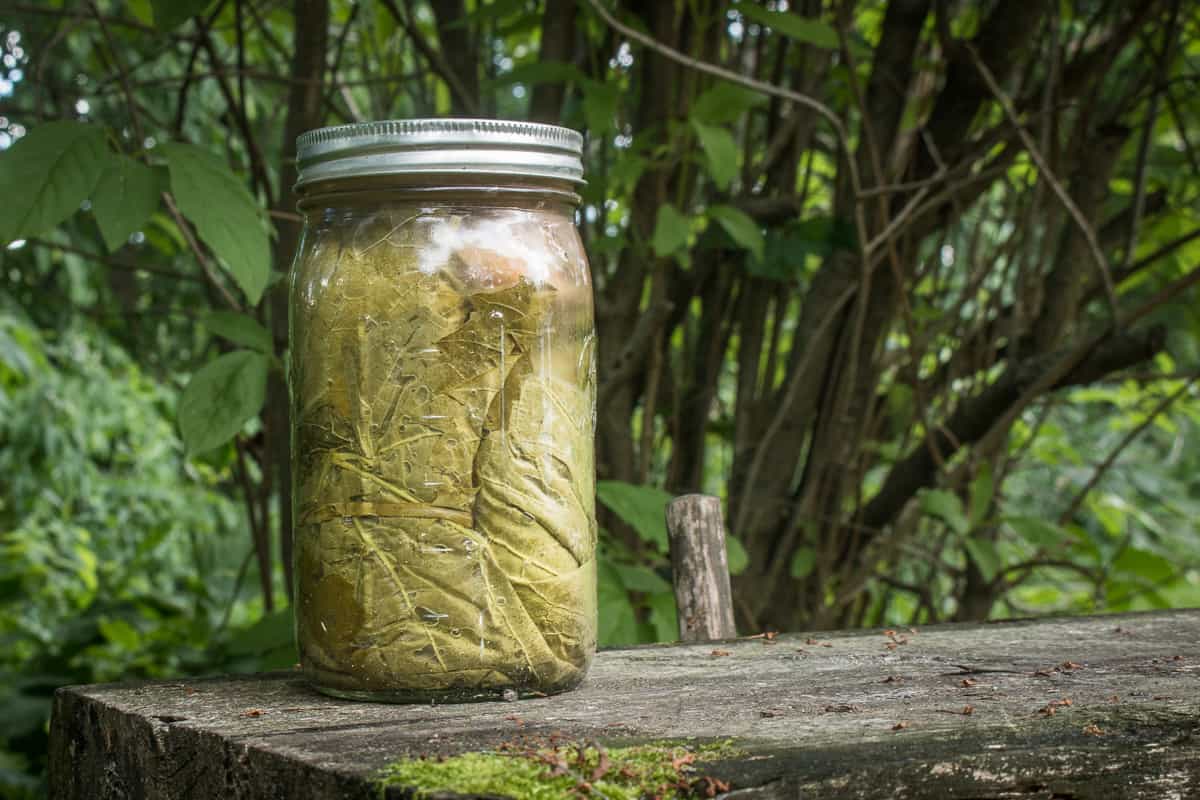
The original pickled grape leaf is the lactofermented one. These will make the best stuffed grape leaves.
Prep time: PT30M
4.95 stars (17 reviews)
Fermentation, Wild Grapes
- When harvesting the grape leaves, be mindful to remove them at the stem so all you have is leaf. Choose clean grape leaves without any foreign matter on them (bird poo, insect eggs, spider webs, etc).
- Make a stack of grape leaves in your palm until it gets large, then fold them firmly into a roll or packet and stuff them into a quart jar.
- Repeat this process, stuffing the jar full until the jar is 3/4 full. Put a clean stone on top to hold the leaves in place, then cover completely with water.
- Pour out the water, mix with the salt to dissolve, then pour back in the jar. (You can also just pour the salt into the jar and shake it, but it takes longer to dissolve.)
- For a more exact ferment using a scale, see note below.
- Put the jar(s) on a cookie sheet or other small tray to catch any brine that may migrate out and allow to ferment at room temperature.
- Open the jar occasionally to allow carbon dioxide to escape.
- Ferment the leaves for 1-2 weeks, depending on your taste. Store the jars in a place out of direct sun with a stable temperature, such as a pantry.
- Finished fermented grape leaves should be water-bath canned (15 minutes for quart jars) to stop the fermentation as it will gradually push the brine out of the jar, then stored in a pantry. You can also keep them in the refrigerator where they will last near indefinitely and don't run the risk of developing pesky kahm yeast.
- Your home-fermented grape leaves will be less salty and tart than commercial grape leaves stored in vinegar brine. But I typically rinse them before using them to make grape leaf rolls, etc.