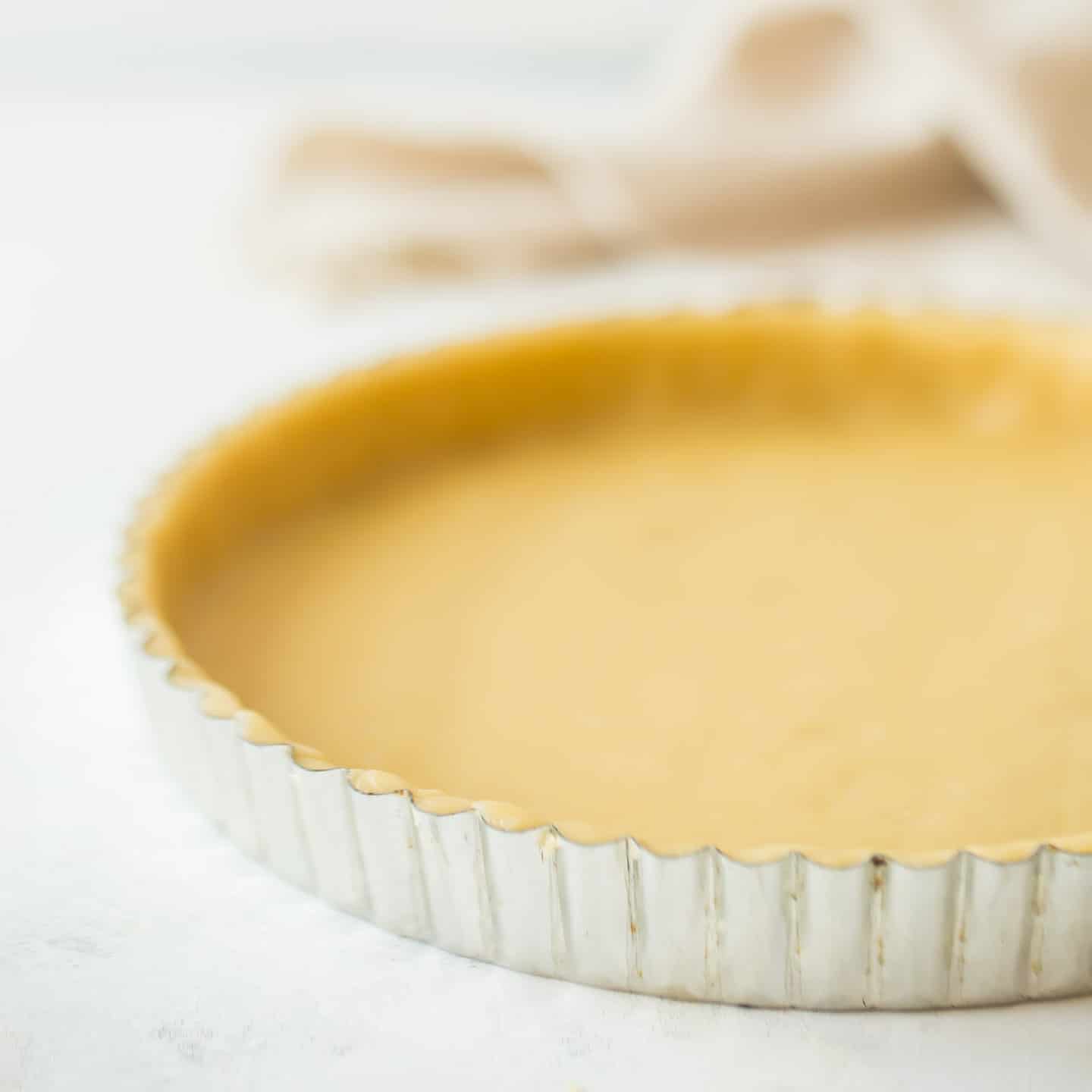
Perfect Tart Crust: buttery, just a little sweet, and tender as can be. This easy-to-make, basic dough will complement any kind of filling!
Prep time: PT20M
Cook time: PT20M
Total time: PT40M
Rating
4.85 stars (19 reviews)
Keywords
gluten free tart crust, how to make tart crust, shortbread tart crust, Tart Crust, tart crust recipe
Ingredients
1 1/2 cups all-purpose flour
1/3 cup powdered sugar
1/4 teaspoon kosher salt
1/2 cup (1 stick) unsalted butter, cold
1 large egg yolk
2 tablespoons heavy cream
1/2 teaspoon vanilla extract
Categories
Breakfast
Brunch
Dessert
Cuisine
American
Steps
Place the flour, sugar, and salt in the bowl of a food processor, stand mixer, or in a medium mixing bowl.
Pulse/stir/cut in the butter with a pastry blender, until the mixture resembles coarse meal.
Add the egg yolk, cream, and vanilla, and process/mix/stir until the dough gathers itself into a ball and pulls away cleanly from the sides of the bowl.
Wrap the dough tightly in plastic wrap, and chill for 1 hour.
On a lightly floured surface, roll the dough until it's an inch or two wider than your tart pan.
Press the dough gently into the pan(s), trimming away any excess.
Baking instructions will vary based on the filling you are using.*
Nutitrion
Serving Size: 1 /10 tart
Calories: 182 kcal
Carbohydrates: 18 g
Protein: 2 g
Fat: 11 g
Saturated Fat: 7 g
Trans Fat: 0.4 g
Cholesterol: 47 mg
Sodium: 62 mg
Sugar: 4 g
Unsaturated Fat: 4 g
Reviews
Irina on 2026-02-10 (5 stars): I used another tart shell recipe before this. Disaster. Was a sticky mess. This recipe came to my rescue! I blind baked and then filled with cream and topped with fruit for an easy Valentine's treat. Thank you Allie!
Holly McDonough on 2024-12-20 (5 stars): I've made it twice this Thanksgiving and will continue to use this recipe for other tarts! Delicious!
David on 2024-07-17 (5 stars): In addition to the pie weights, another trick is to allow the dough to overhang the edge, continue the bake stage, and trim it AFTER it bakes. The overhang aids in preventing the shrinkage because the dough can grip the edge. Personally, I recommend trimming it mid-bake after the dough has set a bit, which should minimize any potential edge crumbling/cracking during the trimming.